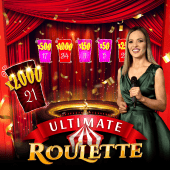
Choose demo observation
Use it when you are learning labels, checking the mobile layout, or comparing attention demands with another slot.
 ok games
Probability desk / game guide
Tower is a compact ok games title for visitors who want to inspect a clear game screen before deciding whether to participate. This guide treats Tower as a decision exercise: observe the supplied information, separate chance from choice, and keep a session measurable rather than chasing a story about a guaranteed outcome.
 Tower / slot
The local game catalogue identifies Tower by this name, image, and slot type. It does not establish a return rate, a win frequency, a prize value, or a special rule, so this page does not invent any of those facts.
The useful answer is simple: use the real lobby entry to inspect the current instructions, then decide whether the displayed pace and stake fit your plan.
The Tower game icon and the both use the same official promotion action. They are entry points, not promises. If you are comparing ok games Tower with another title, compare what the screen actually explains instead of assuming two names share the same mathematics.
The most responsible Tower approach is to establish a repeatable observation routine. First check the title and the visible rule panel. Next identify what action is available at the current state and what information is missing. Finally ask whether the next decision is affordable under the budget you set before opening the game. This is strategy in the narrow, useful sense: it reduces avoidable confusion without pretending to remove chance.
That order matters for probability analysis. A previous outcome changes your memory of the session, not the independent information available for a future outcome. A pattern in a short run can be interesting to record, but it is not evidence of a certain next result.
Visitors often ask which feature makes Tower worthwhile. Without an official rule sheet in the supplied record, the honest answer is to judge only what is visibly documented at the time of entry. Look for the action map, any displayed stake boundaries, the way a round ends, and the account confirmation step. Do not infer a multiplier, bonus round, level structure, or probability from the artwork.
This evidence-first method also fits the broader ok games tournaments conversation: a competitive event may change the reason for visiting the lobby, but it does not turn uncertain results into a guarantee.
Tower Demo is useful when the question is “Can I understand this interface?” It can reveal whether labels are readable on a phone, whether controls are comfortable, and whether the rhythm suits a short session. It cannot answer “What will my next real result be?” and it cannot verify a promotional condition, withdrawal route, or account status.
Use it when you are learning labels, checking the mobile layout, or comparing attention demands with another slot.
Only consider it after eligibility, current terms, stake, budget, and account safety are all acceptable to you.
For readers who approach ok games Tower from a statistics angle, keep two notes: the sample you observed and what the rules actually promised. A small personal log can improve discipline, but it is not a substitute for the official rule display or a mathematically meaningful sample.
When a phone session needs a different pace, the ok games VIP information page explains how to inspect terms and restrictions without assuming that a label means a guaranteed benefit.
Selection should follow the situation, not a headline. Tower may suit a visitor who wants one named slot to study, a compact screen, and a clear stop rule. It may not suit someone who is tired, trying to recover a previous loss, or looking for a certain return. The right choice can therefore be “not today,” even when the title looks attractive.
Before any action, answer these questions out loud. If one answer is no, waiting is a rational decision rather than a missed opportunity.
A disciplined player can still enjoy uncertainty. The point of the checklist is not to make Tower predictable; it is to make your own decision process visible and repeatable.
These real catalogue records offer different visual starting points around Tower. Each name and image is a promotion entry, not a claim that the titles share rules or results.
Confirm the Tower title, read the current displayed rules, observe the interface, and set a time and money limit before any participation.
No. A demo can show presentation and help you practise navigation. It cannot forecast a later result or prove a return rate.
No. Neither the game name nor a short personal pattern guarantees an outcome. Treat each uncertain result as a risk.
Skip it when you are under the applicable age, outside the permitted location, unclear about the rules, beyond budget, or no longer playing for entertainment.